News
Is Amul’s this Solar Cold Chain the Model for Dairy Logistics of Tomorrow?

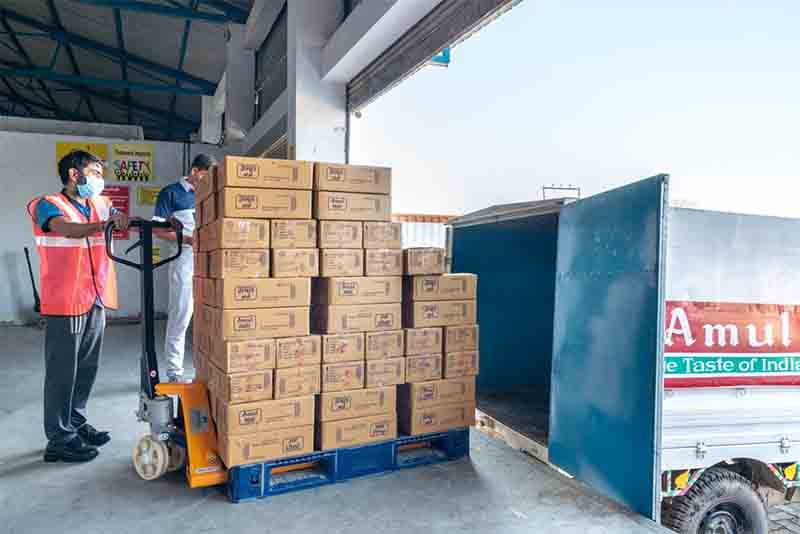
India has one of the leading dairies, Amul, who should be applauded to have gone the extra mile in terms of providing a sustainable future by incorporating solar-powered cold chains in its supply chain. The Gujarat Cooperative Milk Marketing Federation (GCMMF), the marketer of Amul, has embarked on a mega project of providing solar cold storage in all major areas in India and this could become a template in the dairy logistics going forward.
The purpose of this initiative is to address two issues that are increasing in intensity, an increased cost of energy in India and cold chains exposure to the effects of climate change. As we continue to experience heatwaves and power failures in the conventional cold storage devices, the solar energy presents a better, cheaper, and environmentally friendly option.
The pilot projects in Gujarat and Maharashtra already demonstrated positive results on the part of Amul. These units are powered by solar power thus reduces the power dependency on the electricity grid, minimizes the consumption of diesel and also reduces the emission of greenhouse gasses. Such transition not only provides continuity in cold storage of perishable dairy products, but also saves a lot of operational expenses.
The industry experts reiterate that, Amul solar cold chains can regulate to maintain the most desirable temperatures in the chain of supply, right up to collection centres in the villages, through processing plants and distribution centers. This enhances the quality of milk and dairy foods, hence increasing the shelf life and mitigating spillage which is a serious challenge given that milk is produced in excess of 220 million tonnes per year in the country.
The interesting aspect about Amul strategy is its scalability and replicability. The cooperative model enables adoption of solar-powered units village-to-level which gives powers to the farmers and reduces wastage right at the source. Such decentralised systems are made to operate without relying on energy sources in case of unmaintained power.
This, experts hold, may redefine dairy logistics in India, given that the country plans to modernize its agri-supply chains under the uncertainties of climate. Food losses in the supply chain in India contribute to almost half of Indian food supply, with a great deal of losses associated with poor infrastructure of cold storage facilities, and thus the development may be an important milestone as made by Amul.
With a keen eye of monitoring by other dairy brands and food logistics players, government players and stakeholders have also shown their interest in ensuring that such green projects are instigated. The solar cold chain model is also consistent with India s larger ambitions in renewable energy and presents an economic solution to a rural economy based on dairy.
With Amul leading the way in ensuring cleaner and smarter logistics, the solar cold chain-based strategy could as well serve as the example to be followed in ensuring a stronger and future-proofed dairy supply chain in India.
Latest Logistics News – The Logistic Heroes


The editorial team of - Logistic Heroes news Website - managed by a group of seasoned professionals with diverse expertise in supply chain management and latest technologies using in cargo Industry. With several years of on-site experience, the team provides in-dept analysis, conducting interviews and podcasts, helping readers stay informed about the latest trends, changes and innovations in logistics Industry.