Research
The Great Debate: Owner-Operator or Company Driver, Which One Really Benefits You Long-Term?

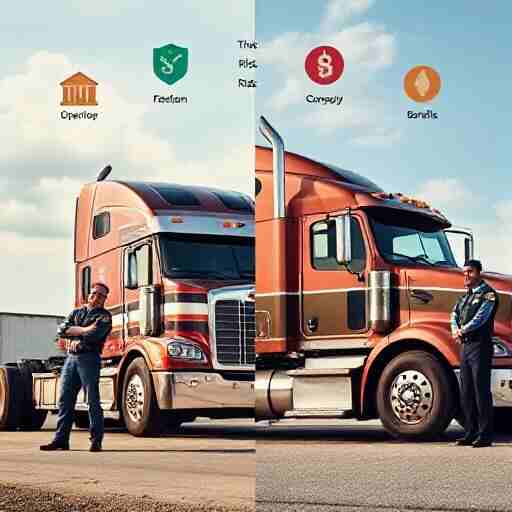
This is one of the biggest choices that any truck driver will ever make, and it is based on whether a driver wants to become an owner-operator or work as a company driver. Each direction has its own chances and the decision can define your future not only by the size of income, but also the way of life, liberty and future plans. Which is really beneficial to you in the long-term course of action?
Let us analyze it:
When you are a company driver, your work is more direct. You drive, you deliver, and you go back home that is unless you are on a route, then your home is the road. You are either paid on the basis of mile, hour or salary. It normally includes benefits like health care insurance, paid leaves, and regular salary. You need not be concerned with maintenance, insurance, permits and truck payments. The best thing is that you do not have to incur the risk of changing fuel prices or sourcing your own loads. The fact that financial stability and the absence of overhead are attractive to plenty of drivers, particularly inexperienced ones or those who prioritize forecastability and quality of life.
Yet, that consistency can usually be accompanied by restrictions. Drivers who are employed by the company may be less empowered in terms of route and schedule and even equipment driven on. The maximum amount of money you can make is normally limited, and your growth is mainly based on policies of the company or years of doing it.
Owner-operators on the other hand are the entrepreneurs of the highway. Your truck is yours, you are in control of your business and you make your own decisions. The liberation of making yourself up, picking what to haul, when to haul it and possibly earning quite a lot more than a company driver is attractive. The truck owner with a good business mind can be financially free after a long time.
This freedom is however at a cost. One might be overwhelmed due to high costs of starting up, sustenance, fuel costs, insurance and always trying to find a freight. It is easy to lose your earnings in one month, one meltdown. You pay taxes and you have no one to fall back on when the freight is stagnant or your truck is in a shop. You are not only a driver but a business person, accountant, mechanic, and logistic manager at the same time.
In the long run, the gains are up to your prioritizing. In need of consistent revenue, reduction in stress levels, and a safe job in the company, then you should join the company as a driver. However, if you want to be independent, earn as much as possible and you are open to risks then it might be worth turning into an owner-operator.
The bottom line is? There is no standard solution. Your decision should be based on the experience of your life, your goals and desire to deal with risk and responsibility. Strategize with what suits your present lifestyle and budget and advance as you climb the ladder. Others who have turned out to be the most successful drivers often begin as workers in the company and accumulate savings, experience after which they become owners when they are ready.
Whichever field you want to choose, be sure that it is better matched with yourselves and career, and not only the salary.
Logistic Heroes – Making sense of the supply chain. Breaking news and supply Chain
Share this: