

Facts
Reckless or Revolutionary? Kerala MVD Flags Safety Risks in Ultra-Fast Deliveries; Facts and Our Explanation

Kerala motor vehicles department, Thiruvananthapuram, Kerala –
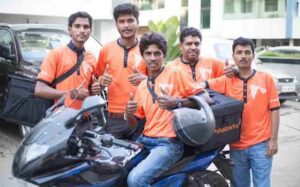
In a strong initiative to reduce road crimes and road accidents, the Kerala Motor Vehicles Department (MVD) has sent formal notices to a number of large quick-commerce and food delivery companies, such as Blinkit, Swiggy, Zepto and BigBasket. This move was after frequent incidences of rash and negligent driving by delivery drivers were observed and the authorities attribute this to the stress of having to meet ultra-fast delivery times.
What Happened
The MVD served show-cause notices to the platform operations of the companies and the dark stores last week as the violation of traffic rules among the two-wheeler delivery personnel was observed repeatedly. The notices provided the firms with a 15-day period to adjust their internal delivery policies to the regulations of road safety, threatening the initiation of more severe legal measures in case of non-observance of the given recommendations.
The officials blame the traditions of delivering goods in as short as 7 to 20 minutes as contributing to unsafe behaviors, such as:
- Speeding and rash riding
- Failure to use helmets and other protective equipment.
- Negligence of lighting signals and dangerous overtaking.
According to the MVD, these actions endanger the safety of riders and other users of the road.
Why the MVD Reacted
The anxieties of the department lie in the fact that there is a correlation between the very short delivery times and dangerous riding habits on the roads of the society. Officials of MVD observed that riders, who are under stress to fulfill the orders as fast as possible in order to earn the maximum money and receive new orders, usually overlook safety and focus on speed.
- Nagaraju, who is the Transport Commissioner, emphasized that although quick-commerce has revolutionized the convenience in shopping, it should not affect quality road safety. Business enterprises have been requested to show how their delivery systems will not encourage careless conduct.
The Broader Context
The quick-commerce platforms have actively promoted ultra-fast delivery models with a promise of very short delivery times to lure customers and gain some market share. However, the safety officers and the traffic authorities believe that this can be an inadvertent stimulus towards taking risks on the roads since timelines are unbalanced without sound safety measures.
The move on the part of Kerala is part of a trend in the regulation process in India with the governments becoming somewhat more regulative on issues surrounding the behavior of the riders and the overall policies which influence the rider behavior.
Implications
To Riders:
In case companies change delivery patterns, riders can be offered more realistic delivery timing and better safety management (through training and enforcement of mandatory protective equipment).
In the case of Platforms:
Firms could be forced to redesign algorithms, change performance goals and reinforce compliance systems to prevent punishment.
To the Public:
Road Safety Norms: Making road safety rules stricter would help to decrease the number of accidents involving delivery riders who have now become an important phenomenon on the city road.
Analysis: Reckless or Revolutionary?
It would be dismissing valid safety issues to refer to the action taken by the MVD as reckless. In its turn, calling it a revolution acknowledges the larger change in the way of governance wherein the responsibility to ensure safety levels stays with the state institutions in the past.
Balance is the key to it: expedited delivery provides a definite benefit to the consumer, particularly in the case of essentials and the efficiency of the last mile e-commerce. However, once the time of set deadlines start to override some simple traffic rules and the safety of workers, the need to introduce some regulation becomes reasonable.
In the example of Kerala, the MVD notices do not amount to bans and crackdowns, but are rather designed guidelines, requiring platforms to reevaluate how their own internal incentives affect the behaviour of riders. This would be an example of other states to make efforts to balance innovation with safety, in case it is successful.
Briefly
The move by the MVD is based on the perceived safety hazards related to ultra-speedy models of delivery. It is an indication of increasing regulatory pressures in which quick-commerce companies should be responsible of workplace activities that not only impact riders but also complete urban road ecosystems. The next few weeks will probably demonstrate whether platforms will make their systems adapt or will be subjected to enforcement measures.
Share this: